hthrjt2017@gmail.com




Wastewater from the textile printing and dyeing industry is recognized as the most difficult type of industrial wastewater. High COD, dark color, violent pH fluctuations, extremely complex components, dyes, slurries, additives, and surfactants are mixed together, and the biochemical system often "indigestion."
What's even more difficult is that when you finally send wastewater into an aerobic tank and reduce more than half of the COD, the color of the effluent may turn darker again the next day. This is not an operating accident, it is a unique "color return phenomenon" of printing and dyeing wastewater. Solving it is the core of this article.
The chroma "reappears" after processing. It's not that the equipment is broken, it's that the chemistry is playing a joke on you.
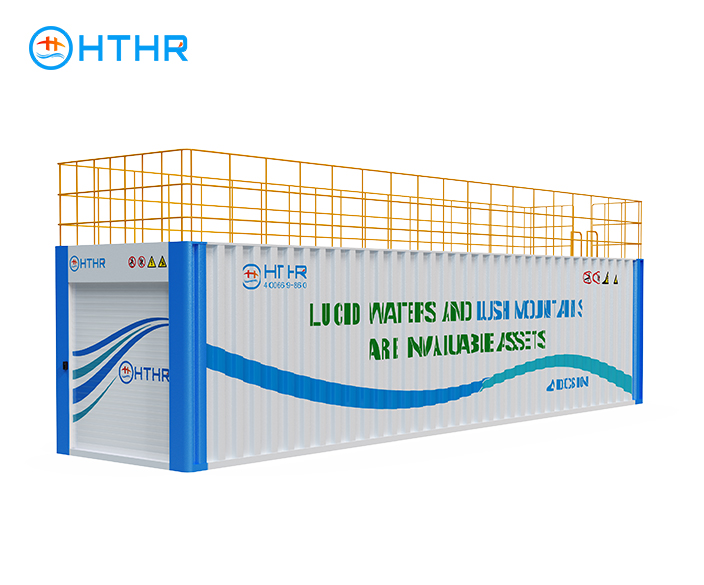
This paper records a set of technical plans for a3,000 - 10,000 m³/daylarge-scale centralized printing and dyeing wastewater treatment station. The core process isozone catalytic oxidation (O) combined with biological activated carbon (BAC) advanced treatment, and the effluent water is directed back for the rinsing process. This route has been mature in the industry, but its design logic, detailed pitfalls and practical benefits are rarely systematically written out.
Let's talk about "color return" first: a despised chemical trap
Printing and dyeing wastewater contains a large amount of reduced dyes. In the hydrolytic acidification or hypoxia stage, these dye molecules will be reduced by microorganisms tocolorless intermediates. You think that the decoloration has been successful, but in fact it is only temporarily "invisible."
Once the effluent enters the aerobic environment, or comes into contact with oxygen in the air after discharge, the intermediate is re-oxidized and the color returns the way it came. This is why many projects have a biochemical effluent color that meets the standards, but changes color again after entering the drainage channel, and complaints follow.
Ozone (O) oxidatively cleaves colored macromolecules into colorless small molecules by generating hydroxyl radicals ( OH) that directly attack the azo bonds (N=N) and conjugated chromophoric groups of the dye. This is not "invisible", but structural damage to fundamentally eliminate the risk of color reversion.
This is the core value of ozone in the advanced treatment of printing and dyeing wastewater: it does not rely on microorganisms, is not limited by temperature (relative), and directly destroys the color structure by chemical oxidation. The ozone dosage is designed to be 1525 mg/L, and the contact time is 1520 minutes. With a micro-bubble aeration head (bubble 1 mm) to improve the mass transfer efficiency, the tail gas is discharged after being destroyed by the activated carbon decomposer, without secondary pollution.
Complete process link: Every step has a reason
Before ozone enters the site, wastewater needs to complete a "physical examination and pre-adjustment" period. It is one of the most common mistakes to push high-concentration wastewater directly into the advanced treatment section at will.
|
preprocessing stage |
Gril-regulated pool cooling air float (DAF) |
Intercepts fiber impurities, homogenizes water quality and water volume, reduces wastewater temperature from 5070 ℃ to below 35℃ to protect the biochemical system; air flotation removes oils, disperse dyes and surfactants (SS removal rate is about 60%). |
|
Improve biodegradability |
hydrolytic acidification tank |
This step is the "leverage point" of the entire process. The long chain of macromolecular dyes (reactive dyes, vat dyes) was interrupted, and the B/C value increased from about 0.20 to 0.35, laying the foundation for subsequent aerobic biochemistry. |
|
subject biochemistry |
A/O anoxic and aerobic + MBR membrane bioreactor |
In the aerobic stage, small molecule organic matter is degraded. MBR replaces traditional sedimentation tanks and effectively traps nitrifying bacteria. The SS of the effluent is approximately zero, and the cumulative COD removal rate can reach 85%. |
|
Core in-depth processing |
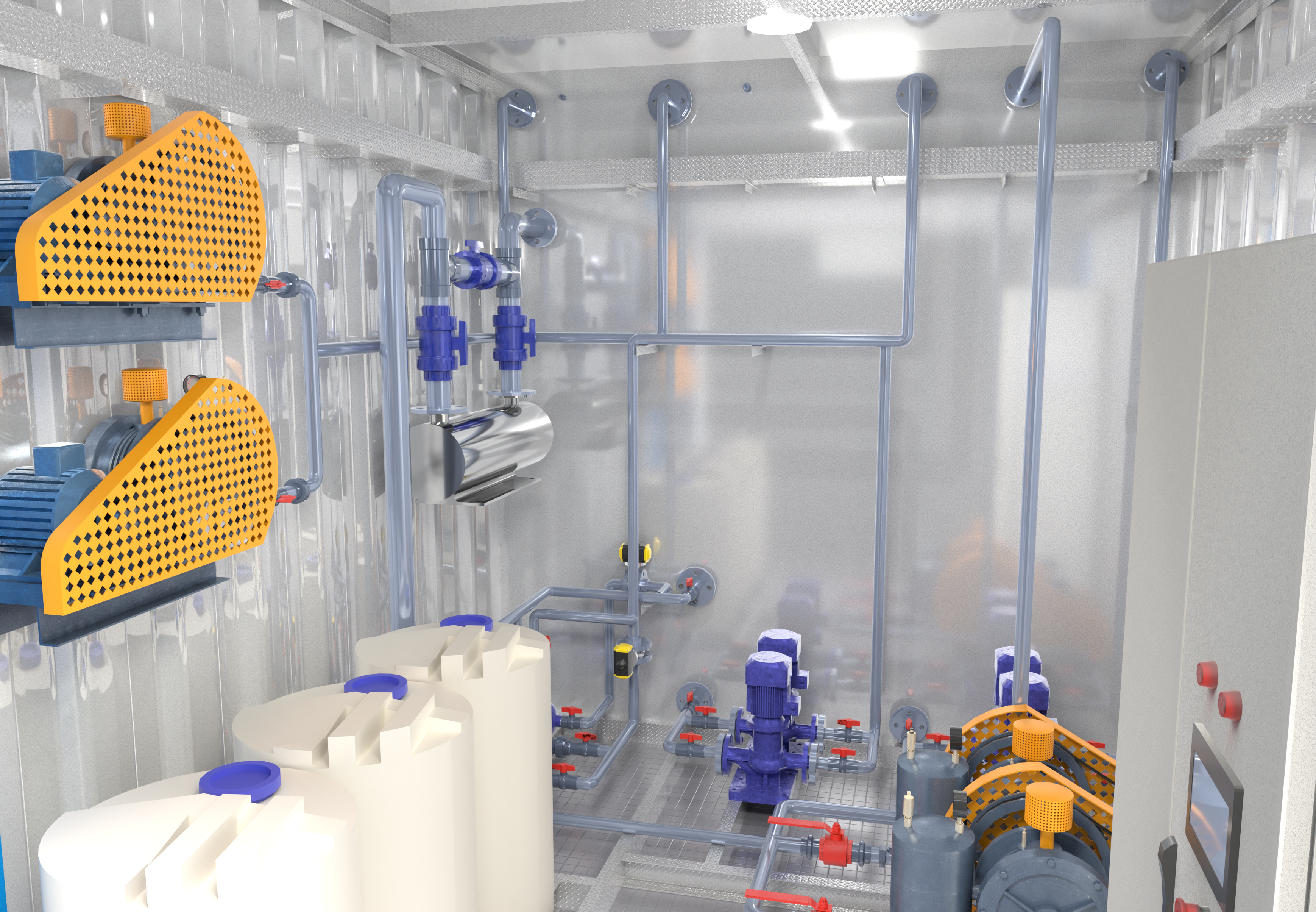
ozone catalytic oxidation |
For the biochemical residual chroma (80 - 150 times), a catalyst (MnO ˇ/-Al ˇ O) is used to enhance OH production efficiency. At the same ozone dose, the decoloration effect is increased by 20 - 30%, and the chroma of the effluent water is reduced to 10 - 30 times. |
|
Core in-depth processing |
Biological activated carbon (BAC) filter |
Physical adsorption (specific surface area 8001,200 m ²/g)+ biological degradation dual track parallel: adsorption of ozonation products, simultaneous mineralization and degradation by biological films on the surface of activated carbon, continuous regeneration of adsorption sites on the carbon, and a service life of 24 years. |
|
Reuse effluent |
Sand filter ultraviolet disinfection rinse reuse pool |
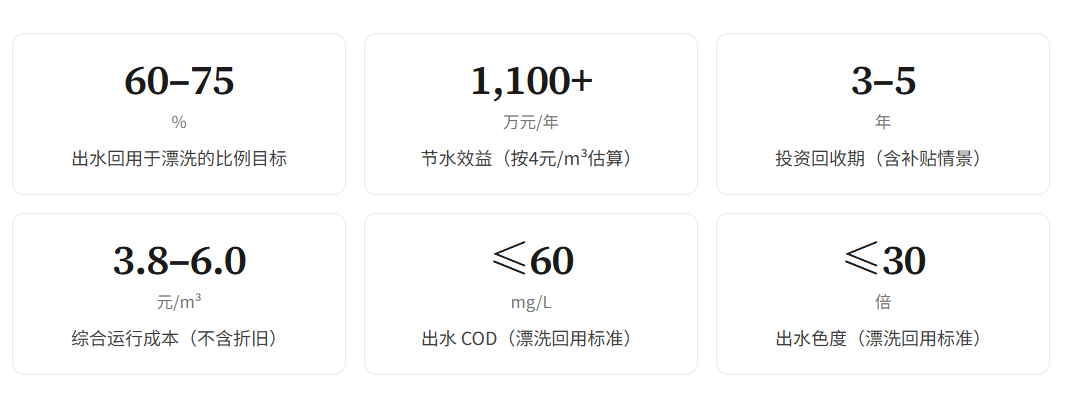
The UV dose is 40 mJ/cm ², and the residual chlorine is controlled at 0.2 1.0 mg/L to ensure microbial safety and not affect the color fastness of the fabric. The effluent COD is 60 mg/L and the chroma is 30 times, meeting the core requirements of the rinsing process. |
Three scene details that textbooks will not write
① Desizing wastewater must not be mixed
The COD concentration of desizing wastewater can be as high as 8,000 30,000 mg/L, which is 515 times that of dyeing wastewater. If it is mixed with rinsing wastewater into the same regulation tank, the COD load of the entire biochemical system will be seriously overloaded, and the regulation of hydrolytic acidification will also fail.
The correct method is to collect separately: desizing wastewater enters the high-concentration wastewater regulation tank separately, and then flows into the main process after hydrolysis and acidification. Rinsing wastewater (lightly polluted) is preferably directly reused after sand filtration and disinfection to reduce the burden of advanced treatment. The benefits of this step far exceed any equipment upgrade.
② Heat exchangers are seriously underestimated
The outlet temperature of printing and dyeing wastewater is generally 5070 ℃. Most projects regard cooling as a "necessary cost" and install a cooling tower. However, a set of titanium plate heat exchangers (heat exchange efficiency 85%) can transfer waste heat from wastewater to production process water. The heat energy recovered every day is equivalent to saving hundreds of kilograms of standard coal. For a scale of 10,000 m³/d, this is not a small account.
③ Not more ozone, the better
This is the most common mistake to make in the O-BAC system. Excessive ozone not only wastes costs, but also damages the biofilm microorganisms in the BAC filter, resulting in a decrease in biodegradation capacity and a reduction in carbon regeneration efficiency, but instead increases the COD of subsequent effluent.
The linked online colorimeter automatically adjusts the ozone dosing amount instead of running at a fixed dose. Measured data shows that closed-loop control can reduce ozone consumption by20% 30%, while protecting the integrity of BAC biofilms.
Economies of scale: Numbers speak
Take the scale of 10,000 m³/day as an example: