Fermentationbased pharmaceutical wastewater originates from the microbial fermentation processes of products such as antibiotics, vitamins, and amino acids, and is widely recognized in the industry as “highdifficulty” industrial wastewater.For mediumsized pharmaceutical companies with a daily treatment capacity of 300–1000 m³, this article provides a mature, stable, and implementable fullprocess technical solution of “pretreatment + anaerobic (IC/EGSB) + aerobic MBR + advanced treatment,” focusing on addressing four major pain points: high COD, high sulfate, high ammonia nitrogen, and biological inhibition.
1. Core Treatment Challenges of FermentationBased Pharmaceutical Wastewater
Extremely high organic concentration: The COD of combined wastewater is generally 8,000–30,000 mg/L, with some mother liquors exceeding 100,000 mg/L.
Presence of biologically inhibitory substances: Residual antibiotics and solvents can inhibit the activity of biochemical systems.
High sulfate (SO₄²⁻): Concentrations can reach 1,000–5,000 mg/L; under anaerobic conditions, H₂S easily forms, corroding equipment and inhibiting methanogens.
High ammonia nitrogen: 200–2,000 mg/L, exceeding the tolerance range of conventional biochemical systems.
Severe water quality fluctuations: Batch production causes large variations in COD, pH, and salinity, requiring high shock resistance.
2.Process Selection Logic: 300–1000 m³/day Scale
At this scale, “pretreatment → anaerobic (IC/EGSB) → MBR → advanced treatment” is the mainstream mature route.
Typical influent water quality (after mixing): COD 8,000–30,000 mg/L, BOD₅ 3,000–12,000 mg/L, ammonia nitrogen 300–800 mg/L, sulfate 800–3,000 mg/L, pH 4–10.
Effluent must comply with the *Discharge Standard of Water Pollutants for Fermentation Pharmaceutical Industry* (GB 219032008): COD ≤120 mg/L, ammonia nitrogen ≤35 mg/L.
3.Phase One: PreTreatment System — Guardian of the Biochemical System
Pretreatment failure is the direct cause of many project collapses.
3.1 Source Segregation and Emergency Regulation
Separate collection of highconcentration mother liquor (COD >50,000) and lowconcentration wastewater. Suggested effective volume of the regulation tank: 1.5–2.0 times the daily average flow, equipped with a submersible mixer and online pH/COD monitoring.
3.2 Physicochemical PreTreatment
Neutralization tank: Stabilize pH to 6.5–7.5.
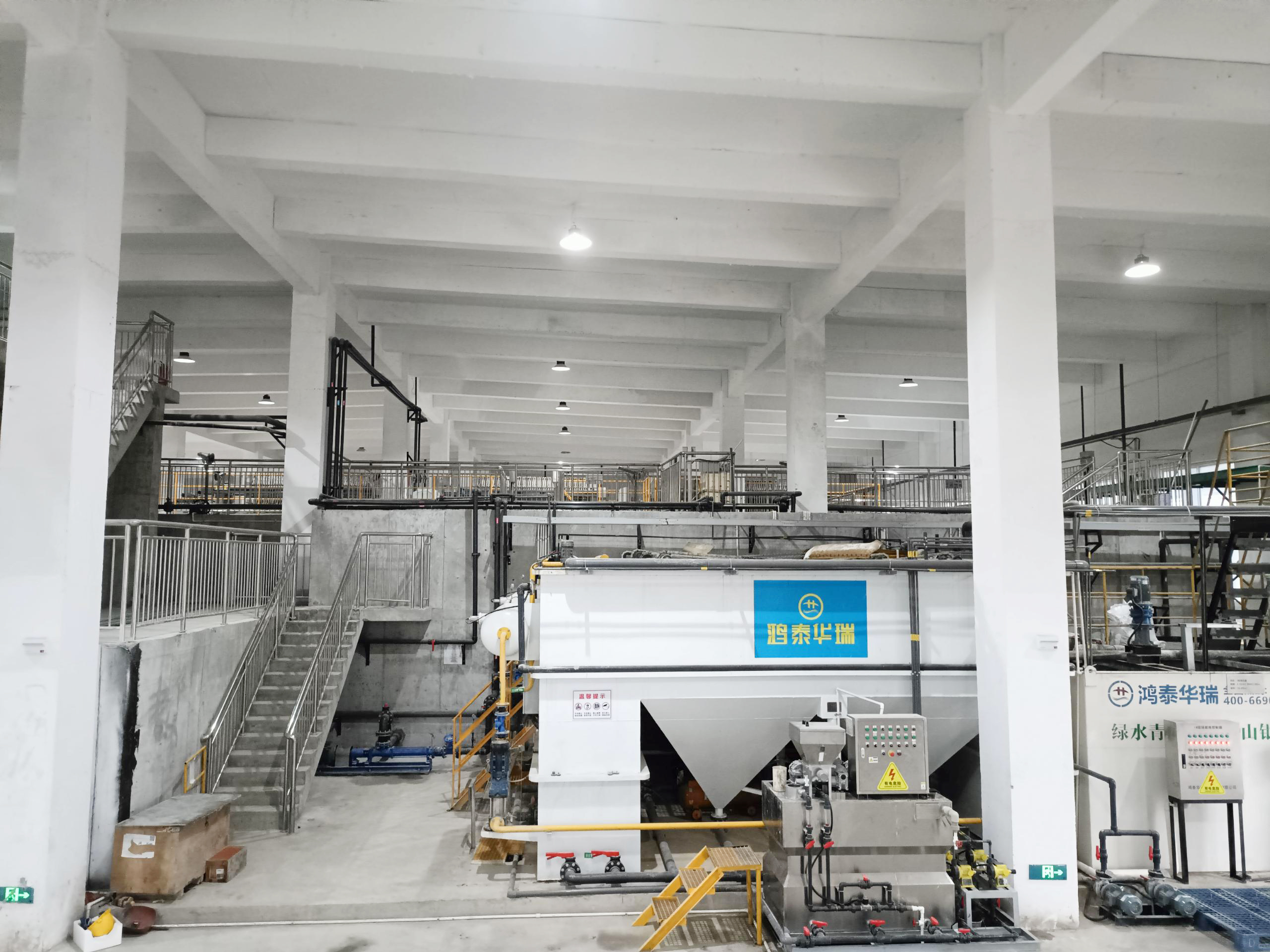
Flotation/settling: Reduce SS below 200 mg/L; choose dissolved air flotation (DAF) or inclined plate settling.
3.3 Special Treatment for HighConcentration Mother Liquor
Microelectrolysis + Fenton oxidation: Increase B/C ratio (biodegradability) from 0.2 to above 0.4, reduce toxicity.
MVR evaporation: Reduce volume of highsalt, highconcentration mother liquor; condensate enters the biochemical system.
3.4 HighSulfate Control Strategy (Key)
Dilution blending: Keep SO₄²⁻ entering anaerobic ≤1,500 mg/L, COD/SO₄²⁻ > 8.
Chemical precipitation: Add CaCl₂ to form CaSO₄ precipitate to remove sulfate.
H₂S online monitoring + iron salt removal: Prevent H₂S >200 mg/L from poisoning anaerobic bacteria.
4. Phase Two: Anaerobic Treatment — Core Unit for HighLoad Organics Degradation
Anaerobic treatment reduces COD from tens of thousands mg/L to 1,500–3,000 mg/L while producing biogas.
4.1 Process Selection: IC Reactor vs EGSB
IC Anaerobic Reactor (Internal Circulation): Volumetric load 15–25 kg COD/(m³·d), HRT only 4–6 hours, high shock resistance, small footprint — first choice for 300–1000 m³/day fermentation pharmaceutical wastewater.
EGSB Reactor: Load 8–15 kg COD/(m³·d), slightly better sulfate tolerance, suitable for mediumlow concentration.
Recommended solution: IC reactor + frontend sulfate precontrol.
4.2 Key Parameters for HighSulfate Operation
COD/SO₄²⁻ ≥ 8
SO₄²⁻ ≤ 1,500 mg/L
Dissolved H₂S ≤ 200 mg/L (add iron salts if exceeded)
Temperature 35–38°C (mesophilic anaerobic)
VFA/alkalinity < 0.3
4.3 Biogas Utilization
Daily biogas production 300–2,000 m³, usable for system heating, reducing operational energy consumption.
5. Phase Three: Aerobic MBR System — Guarantee for Stable Effluent Compliance
Anaerobic effluent COD 1,500–3,000 mg/L, ammonia nitrogen 100–500 mg/L, requiring further aerobic degradation.
5.1 Advantages of MBR Process
High sludge concentration (MLSS 8,000–15,000 mg/L), strong shock resistance.
Nearzero SS in effluent, COD ≤50 mg/L, ammonia nitrogen ≤5 mg/L.
Eliminates secondary settling tank, saving space.
Long sludge age (30–60 days), favoring nitrifying bacteria enrichment for efficient nitrogen removal.
5.2 Key Design Parameters
HRT: 12–24 hours
DO: Aerobic zone 2.0–4.0 mg/L, anoxic zone <0.5 mg/L (if A/O configuration)
Membrane flux: 8–12 L/(m²·h)
5.3 Membrane Fouling Control
Ensure pretreatment SS <200 mg/L
Airtowater ratio 10:1–15:1
Regular maintenance cleaning (sodium hypochlorite 200–500 mg/L)
Appropriate FeCl₃ addition to reduce H₂S and membrane fouling
6. Phase Four: Advanced Treatment — Final Line of Defense
MBR effluent usually meets standards; if color or residual antibiotics are a concern, consider adding:
Ozone catalytic oxidation: Break antibiotic ring structures, decolorize and deodorize, dosing 10–30 mg/L.
Activated carbon adsorption: Capture trace organics, empty bed contact time ≥10 minutes.
UV disinfection: Inactivate residual bacteria, assist antibiotic photolysis.
7. Main Equipment List (300–1000 m³/day Scale)
|
Unit
|
Key Equipment & Parameters
|
|
Homogenization & Regulation Tank
|
Effective volume 1.5–2.0× daily flow, submersible mixer, online pH/COD
|
|
Physicochemical PreTreatment
|
Fenton reactor (HRT 30–60 min, pH 3.0–3.5)
|
|
IC Anaerobic Reactor
|
High aspect ratio 4:1–6:1, 316L or carbon steel internal corrosion protection, temperature control + biogas collection + H₂S monitoring
|
|
MBR System
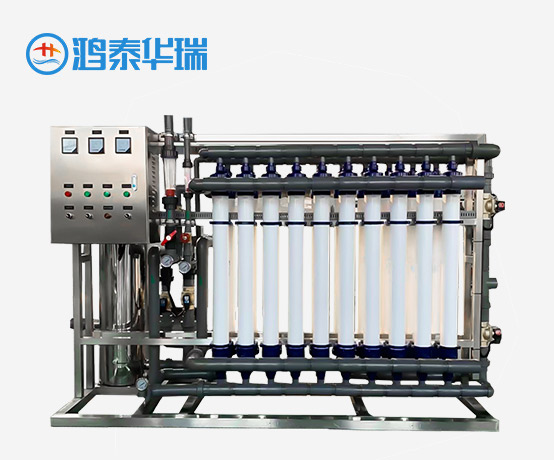
|
PVDF hollow fiber ultrafiltration membrane, pore size 0.04–0.1 μm, flux 8–12 L/(m²·h)
|
|
Ozone Catalytic Oxidation Tower
|
Ozone generator 1–5 kg O₃/h, offgas destruction device
|
8.Quick Answers to Common Questions
Anaerobic system acidification: Common causes: sudden influent load increase, temperature drop, H₂S poisoning, low pH. Emergency measures: stop influent, add sodium bicarbonate, raise temperature, trace the source.
MBR flux decline: First increase aeration scouring; if ineffective, perform maintenance cleaning (sodium hypochlorite); if recovery <60%, conduct restorative cleaning or check pretreatment failure.
Why control COD/SO₄²⁻ ratio: If <3, sulfatereducing bacteria dominate, methanogens are inhibited, excessive H₂S forms, and the system collapses. If >8–10, methanogenesis dominates.
9. Summary
For 300–1000 m³/day fermentationbased pharmaceutical wastewater, success depends on solid pretreatment, adequate regulation tank, strict highsulfate control, and meticulous anaerobic and MBR operation. The value of the investment lies not in construction but in stable daily compliance. Specific projects require customized design based on actual water quality.


 hthrjt2017@gmail.com