New ecology of intelligent sewage treatment: on-site treatment·precise dosing·unmanned drug delivery, stable operation of the entire chain
- release date: 2026-04-03 11:23:31
- author: Hongtai Huairui
- Reading: 527
- key words: FyhoneOS / Hongtai Huarui / Intelligent Integrated Sewage Treatment Equipment / Intelligent Dosing Equipment / Unmanned Medicine Delivery Vehicle / Human-Vehicle-Machine Integration / Decentralized Sewage Treatment / Reclaimed Water Reuse / Unattended Operation / Stable Compliance
Muscat receives less than 100 mm of rainfall annually. Eighty percent of its land is desert, and it has no natural rivers. People here understood earlier than most of the world: water is not a resource—it is life.
Yet in such a city, nearly 30% of treated reclaimed water is discharged daily into evaporation ponds or flows into the gulf due to missing distribution networks or mismatches between supply and demand. If no improvements are made, this proportion could rise to 50%. Meanwhile, Muscat’s five wastewater treatment plants produce 128 tons of sludge every day, with limited disposal options. A considerable number of households still rely on septic tanks to collect sewage, which is periodically pumped out by tanker trucks and transported to treatment plants.
This is not a problem of insufficient treatment capacity— the Al Ansab plant’s membrane bioreactor processes 125,000 cubic meters per day and was once the largest MBR facility in the Middle East. The problem lies at both ends of the system and in between: where wastewater is collected, where chemicals are delivered, and where people are stationed to ensure proper operation.
Muscat’s situation is an extreme case, but it reveals a universal dilemma: wastewater treatment systems are getting larger, yet operational gaps remain unaddressed. Chemical dosing relies on experience, inspections rely on schedules, and chemical supply depends on manual periodic delivery—every step depends on continuous human presence, which is precisely the hardest variable to guarantee.
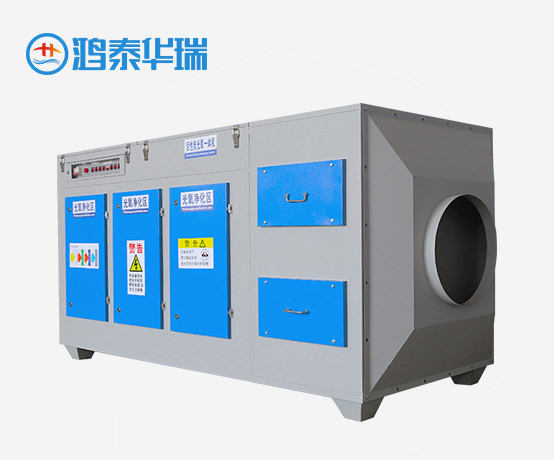
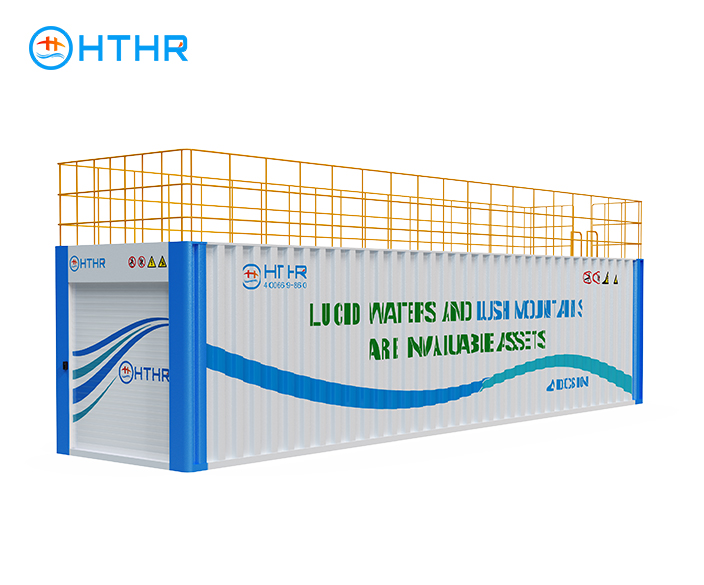
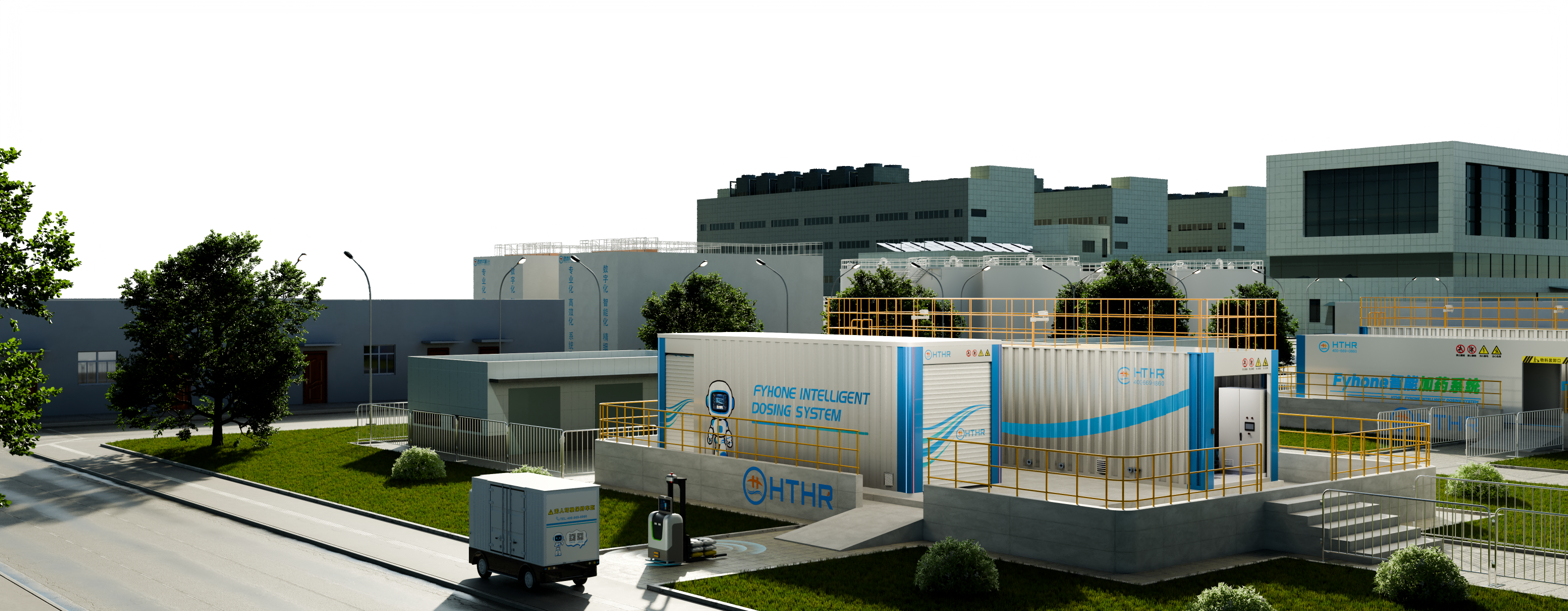
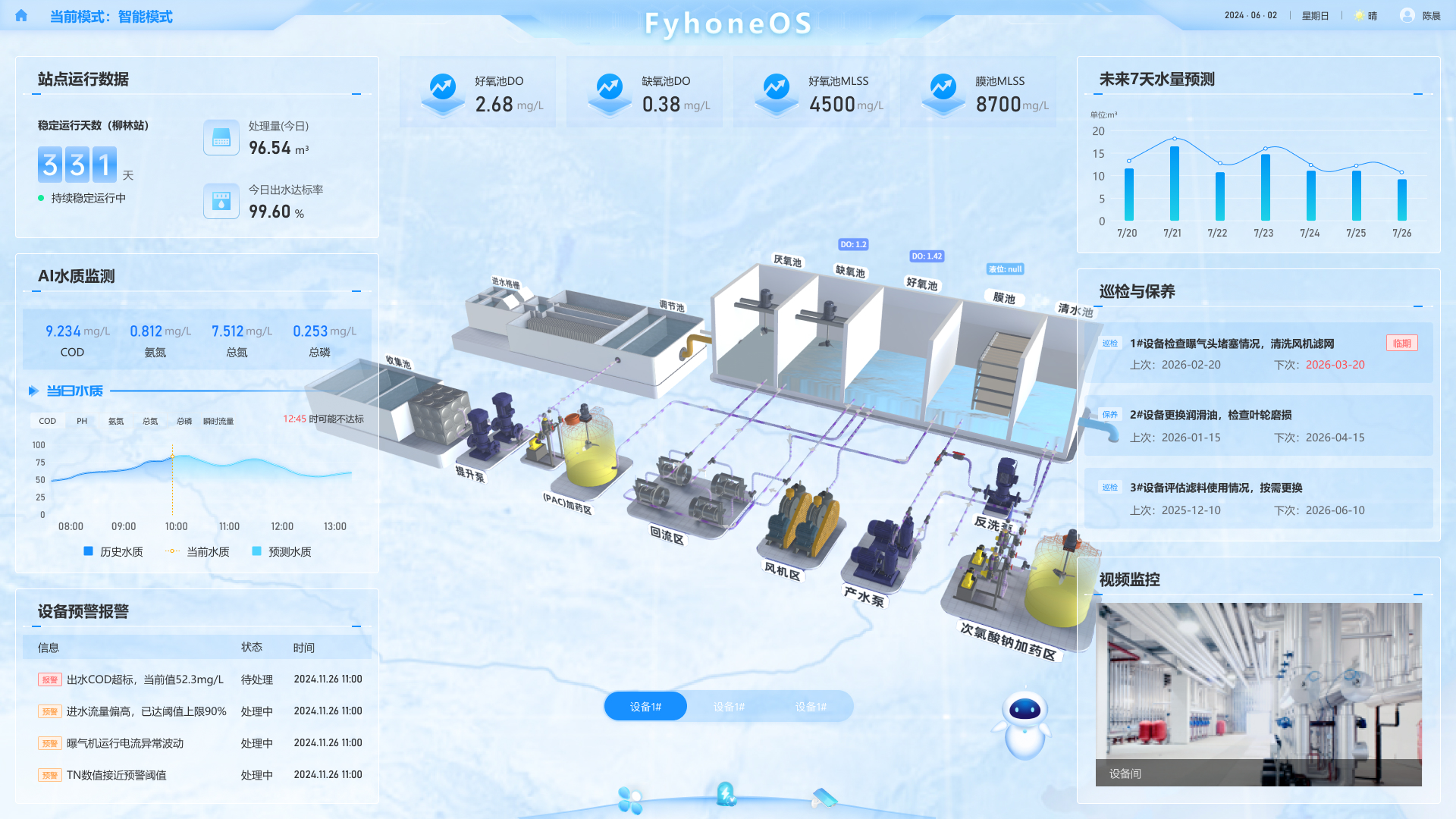
FyhoneOS integrated intelligent wastewater treatment equipment addresses the question of “where to treat.” Its modular design allows deployment in hotel backyards, industrial park edges, and communities far from main pipelines—places that rely on septic tanks and cannot wait for network expansion. Treatment and reuse happen locally, without waiting for unified urban infrastructure development.
But local treatment does not guarantee stable compliance. Dosing accuracy is the most underestimated link in the entire chain. If the dosing of flocculants and disinfectants is not aligned with real-time water quality, the result can range from substandard effluent to disruption of the entire biochemical system balance. In Muscat, exceedances in nitrate, E. coli, and suspended solids have been recorded, largely due to this issue. FyhoneOS dosing equipment connects to real-time water quality sensors, dynamically adjusting dosing levels based on influent load—turning what was once reliant on experience and luck into a traceable and optimizable data-driven process.
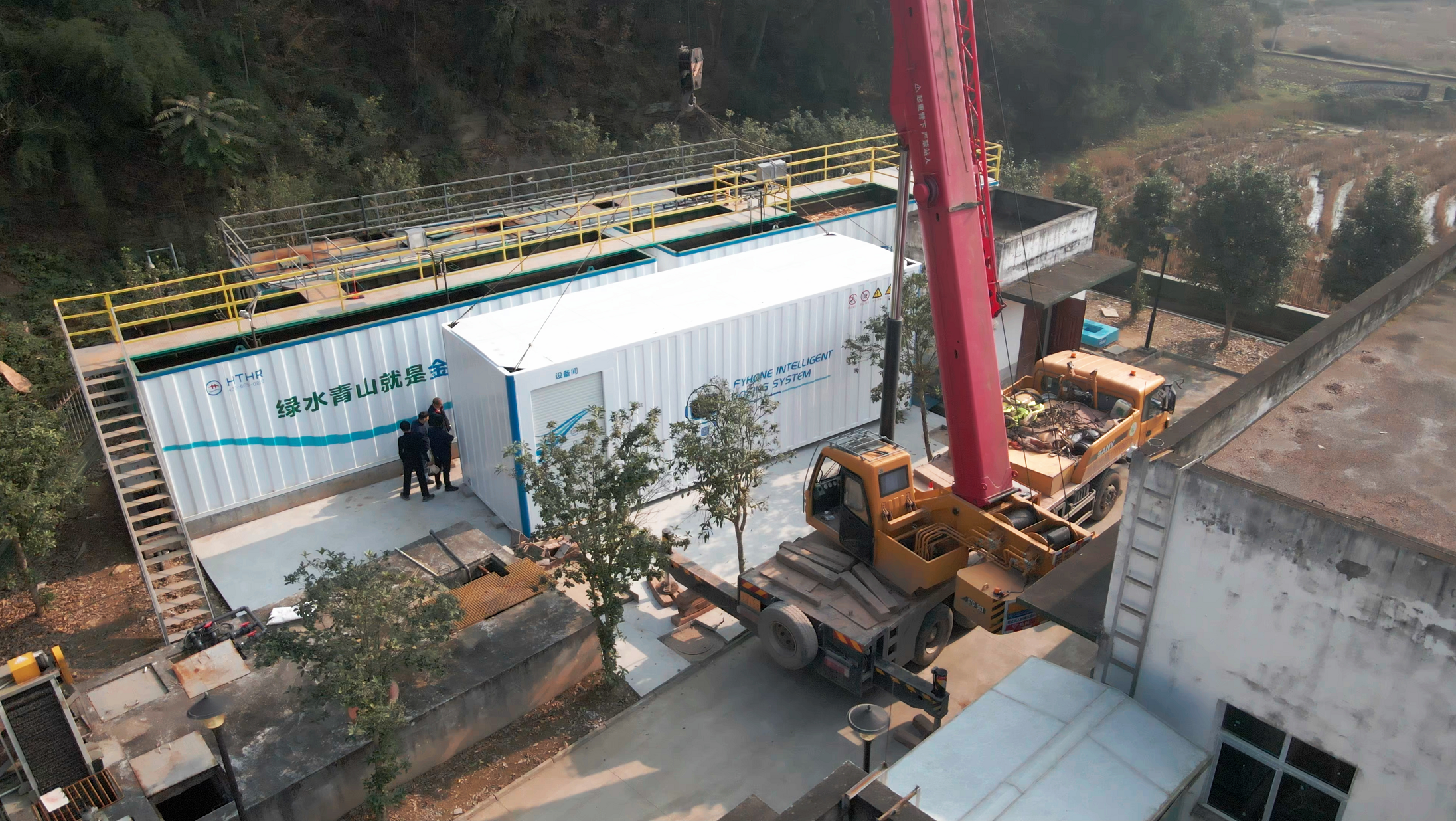
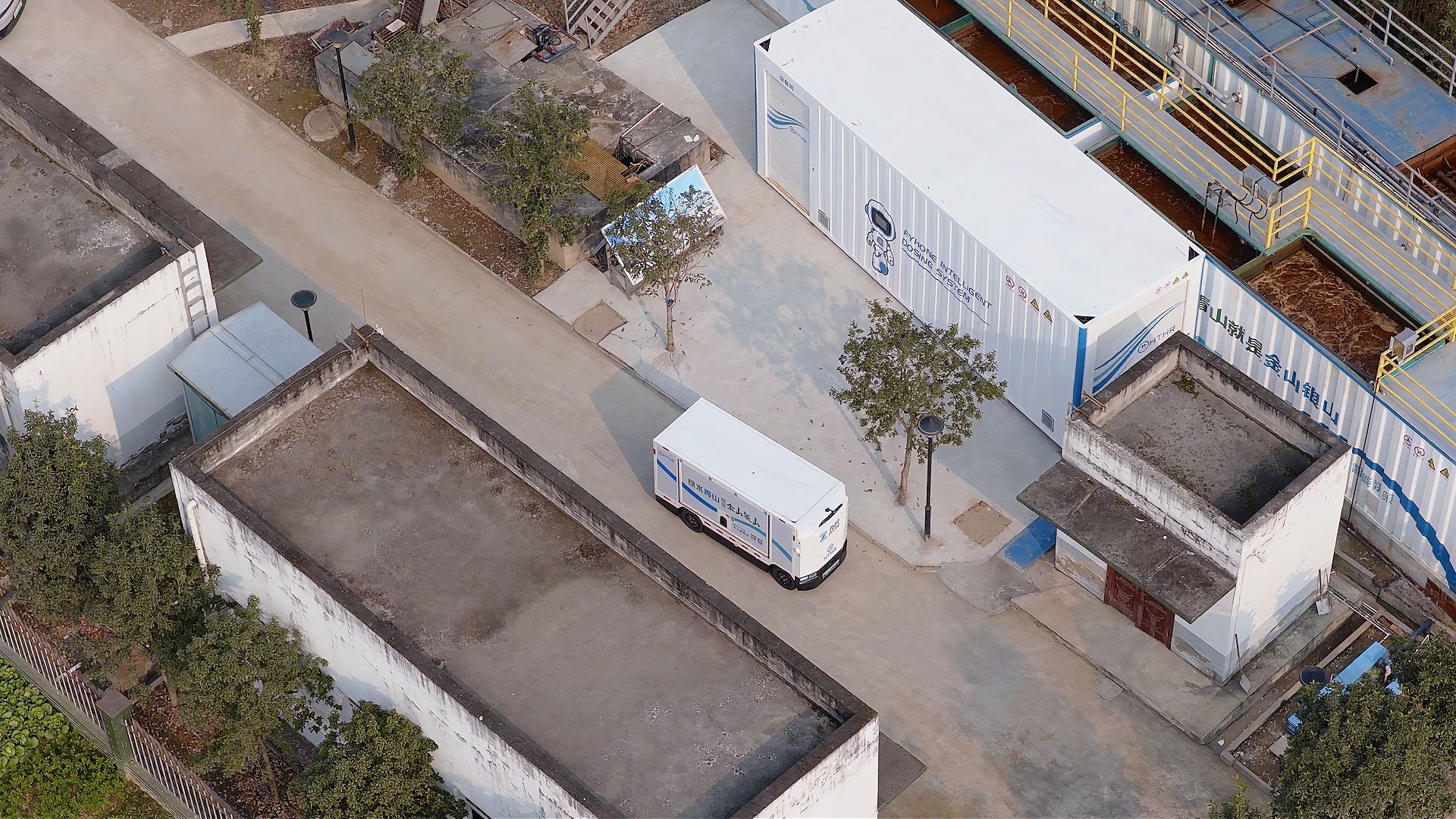
If equipment solves treatment and dosing solves precision, the remaining gaps lie in supply. The hardest part of managing decentralized stations is not the equipment, but the chemicals. It is difficult for personnel to stay stationed at every small site, and periodic delivery is often affected by weather, road conditions, and staffing schedules. Autonomous chemical delivery vehicles, integrated into a dispatch platform, monitor chemical levels at each site in real time and independently plan delivery routes, completing replenishment before supplies run out. This frees people from repetitive stationing duties and allows them to focus on tasks that truly require judgment and experience—handling anomalies, optimizing processes, and coordinating across sites.
This is FyhoneOS operational logic of assigning roles to people, vehicles, and machines: machines handle local treatment and daily water loads; vehicles manage chemical circulation to maintain continuous operation; people focus on exception handling and strategic decisions. All three are connected through a unified dispatch platform, with real-time data flow ensuring that any fluctuation is detected before escalating into a failure.
Haya Water has acknowledged that rapid urban expansion is overwhelming existing treatment facilities, and the real challenge is making systems run more stably, not just bigger. This statement reflects a broader reality in the Middle East—skilled technical workers are scarce, labor costs are high, and decentralized sites are numerous. Systems capable of stable autonomous operation are themselves a scarce resource.
In 2023, Oman issued Royal Decree No. 40, introducing a new water and wastewater regulatory law that emphasizes modern technology adoption and market-oriented reform. Private investment is now welcomed in a sector previously dominated almost entirely by state-owned institutions. Oman has expressed willingness to cooperate with partners from Spain, Japan, China, and other countries. What is needed is not just capital, but solutions that can be truly implemented locally and operate stably over the long term.
A system capable of unattended operation under extreme climates, a product suite that manages dosing precision at the data level, and an architecture that integrates decentralized sites into unified dispatch—these were not designed specifically for Muscat, but they directly address its most urgent challenges.
In the desert, not a single drop of water should be wasted. Wastewater treatment is never the end—it is the beginning of making water useful again.
FyhoneOS · Nationwide Partnership Recruitment
FyhoneOS is now recruiting partners nationwide to jointly promote the localized implementation of an intelligent wastewater treatment ecosystem. If you are interested in acting as a regional agent or collaborating to promote integrated human-vehicle-machine wastewater treatment solutions, you are welcome to get in touch.
2026 Shanghai IE Expo · Hongtai Huarui Awaits You
Hongtai Huarui will soon appear at the 2026 Shanghai International Environmental Expo, Booth: Hall E2, D70 / E70. The event will feature on-site demonstrations of integrated intelligent wastewater treatment equipment, intelligent dosing systems, and autonomous chemical delivery vehicles. Industry peers, partners, and prospective clients are warmly invited to visit and engage.


 hthrjt2017@gmail.com