The global municipal wastewater treatment market has exceeded USD 98 billion, and the industry is undergoing a profound shift — from simple compliance-based discharge toward resource recovery, low-carbon operations, and intelligent management. Behind the numbers lies a shared dilemma facing every treatment plant: standards are tightening, energy consumption is climbing, and talent is slipping away.
These three pressures are turning “smart transformation” from an option into an imperative.
- Tightening Standards: Less and Less Room for Process Error
The policy signal is already crystal clear.
In early 2026, China’s Ministry of Ecology and Environment released a draft revision of discharge standards for public comment, tightening the total nitrogen limit to 5 mg/L and adding monitoring requirements for microplastics and antibiotic resistance genes. The EU passed an amendment to the Urban Wastewater Treatment Directive at the end of 2025, requiring all large treatment plants to achieve pharmaceutical residue concentrations below 100 ng/L in effluent by 2035. The U.S. EPA has launched a mandatory control program for PFAS substances, covering roughly 5,800 municipal treatment plants.
Effluent standards are moving from Class 1A toward Quasi-Class IV and beyond, which means the margin for process error is shrinking dramatically. Fluctuations in any link — abrupt changes in influent quality, a drop in microbial activity, inaccurate aeration control — can directly trigger compliance risks.
Traditional manual response mechanisms are inherently time-lagged. By the time samples are taken, manual analysis is completed, and parameters are adjusted, the water has already been discharged.
- Rising Energy Consumption: Electricity — The Silent Sinkhole of Operating Costs
The global wastewater treatment sector generates approximately 840 million tonnes of CO₂-equivalent greenhouse gas emissions each year, with electricity consumption and methane slip accounting for over 70%.
Electricity is typically the single largest cost item in a plant’s operating budget, representing 30% to 40% of total expenses. A significant share comes from the aeration system — blowers running at high load around the clock, dissolved oxygen levels without fine-tuned management, and effective utilization rates often far below design values.
European data provides a compelling benchmark: after completing system retrofits, more than 2,500 wastewater treatment plants have reduced average energy consumption to 0.28 kWh/m³. This is not an unattainable breakthrough — it is the result of systematic, precision control.
Under the twin pressures of carbon-neutrality targets and operating costs, energy savings are no longer a bonus; they are the baseline requirement for sustainable operation.
- Talent Drain: Expertise Cannot Be Scaled Through People Alone
Experienced process engineers are the scarcest and most fragile asset of a wastewater treatment plant. They draw on years of accumulated judgment to spot abnormal influent conditions, adjust process parameters, and handle emergencies. But this expertise cannot be inherited like a cultural tradition, nor can it automatically trigger itself at three o’clock in the morning.
As treatment capacity expands and process complexity rises, a model that relies solely on human operators to maintain operational stability only sees ever-increasing marginal costs — while its ceiling for stability gets lower and lower.
- Most “Smart” Solutions on the Market Only Solve the Problem of “Visibility”
The market is flooded with smart water solutions. Big screens, data dashboards, real-time monitoring, digital twins — these terms appear in countless product brochures.
But the vast majority of these solutions essentially move existing data onto an interface, add a few threshold alarms, and operators are still left to decide for themselves whether to adjust chemical dosing, whether to change the recirculation ratio, whether to reduce aeration.
The system provides information, not decisions. Observation, not control.
True intelligent value lies in closed-loop control capability:
Anticipating water quality changes before they happen, rather than reacting after the fact.
Automatically adjusting critical process parameters based on real-time operating conditions, rather than depending on manual intervention.
Translating the experiential logic in an operator’s mind into reproducible and iterable algorithmic models, not just manual rules coded in software.
This level of intelligence requires deep integration of process mechanistic models and machine learning — it demands genuine domain understanding of the wastewater treatment process, not just the ability to connect to data.
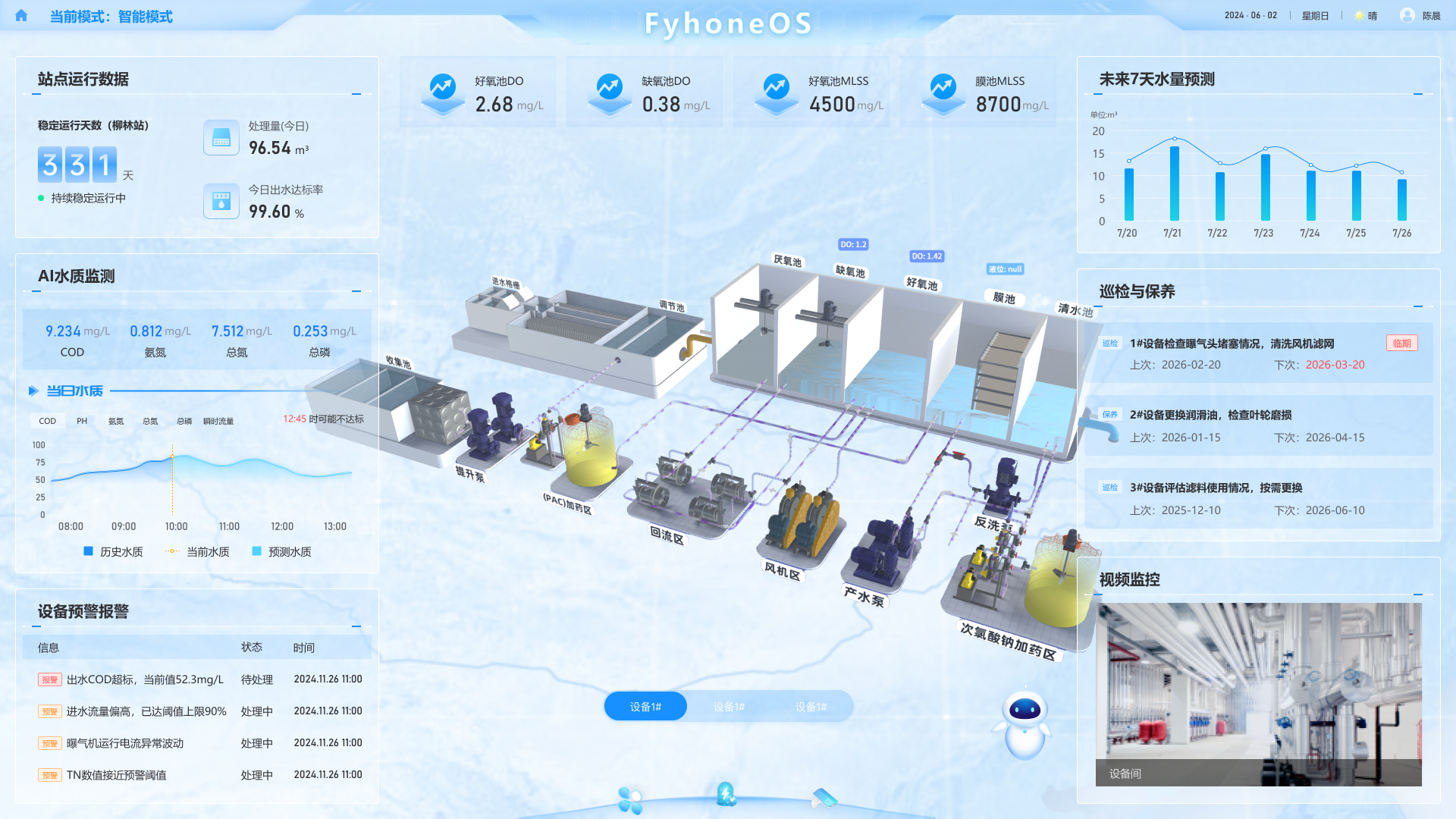
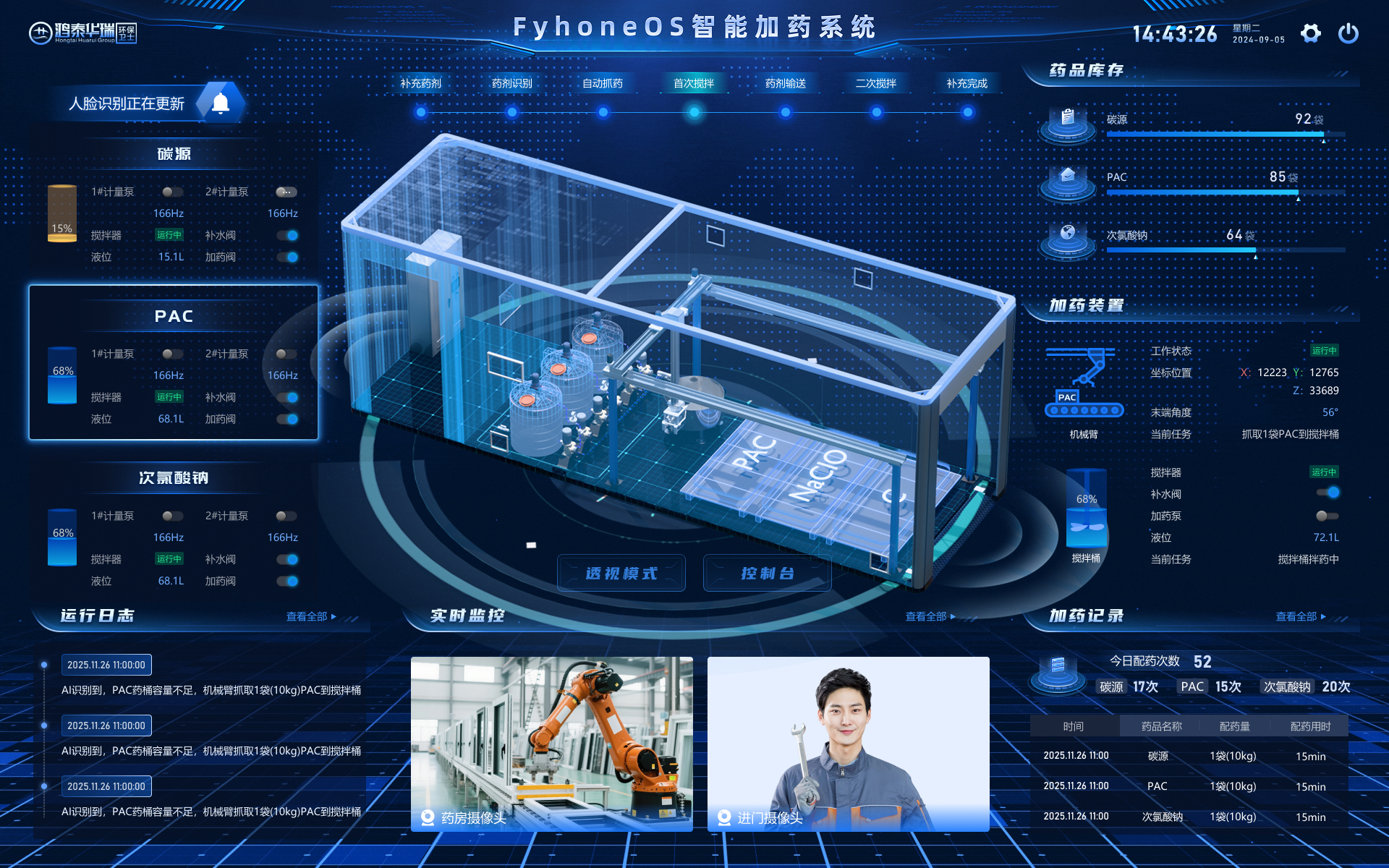
- The FyhoneOS: A Closed-Loop Control Solution Built from Real Pain Points
The design logic of Hongtai Huarui’s FyhoneOS has always started from the genuine pain points of operations — not from a desire to show off technology.
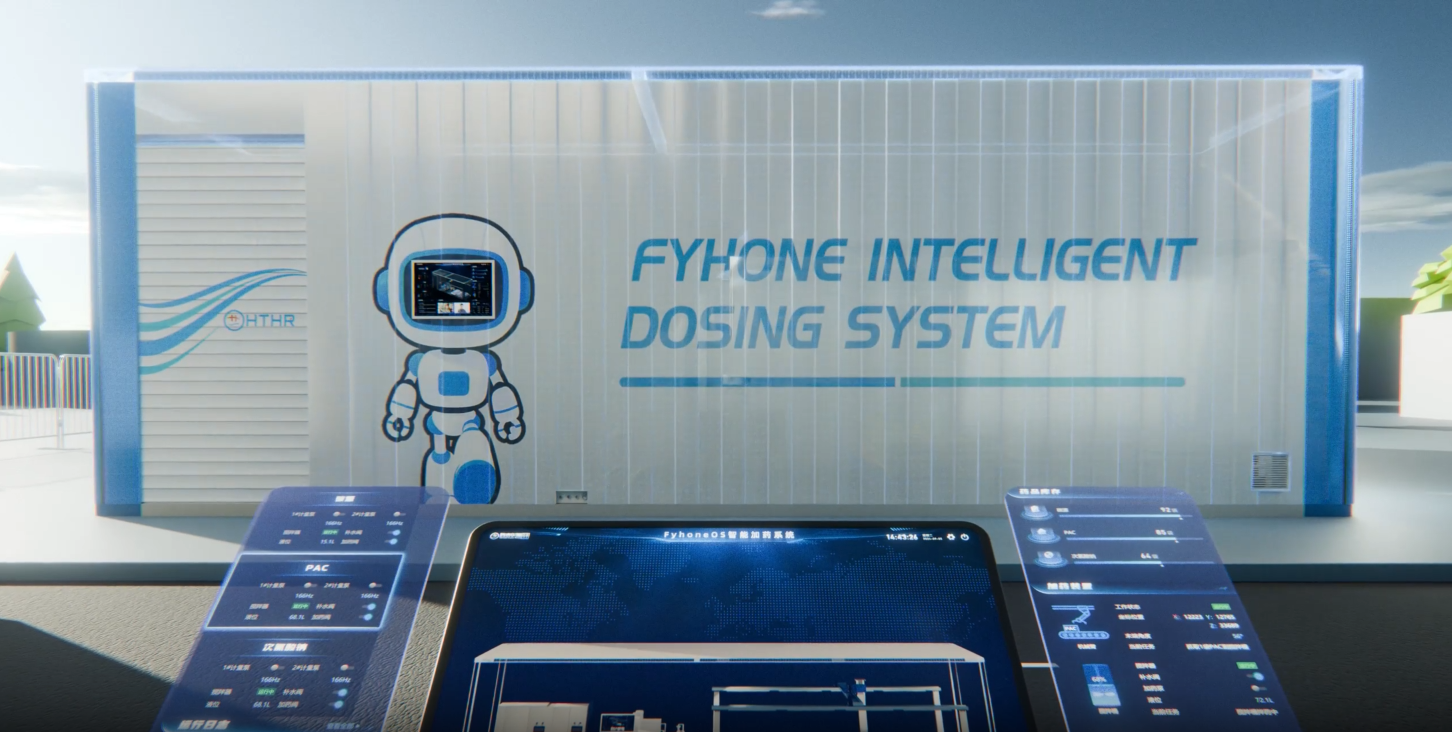
Underlying architecture: The fusion of process mechanism models and deep learning algorithms. This is not a pure data-driven black box, but an intelligent control system with process interpretability.
Influent shock detection: By fusing historical data with real-time sensor signal analysis, the system issues early warnings when significant changes in influent quality occur, buying a time window for process adjustment. Intervention begins before a problem materializes — not after effluent is already out of compliance.
Precision aeration control: Aeration rates are dynamically adjusted based on real-time water quality data. While ensuring stable, compliant effluent, energy consumption is continuously driven down — rather than running blowers at full speed as an insurance policy.
Operational decision support: The system continuously outputs process optimization recommendations. The logic is transparent and explainable — operators can understand why a specific recommendation is given, instead of passively executing black-box commands.
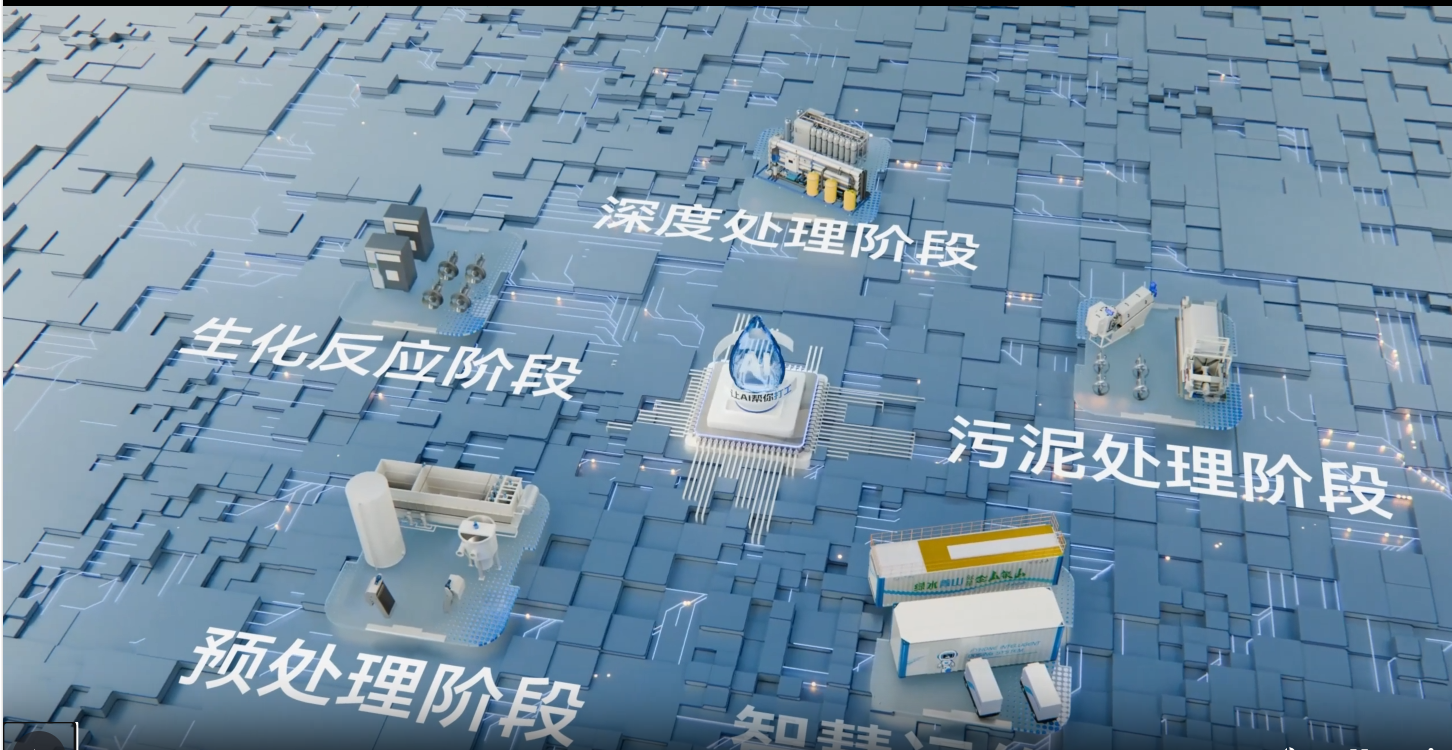
Implementation pathway: No large-scale replacement of existing hardware is needed. Deployment is completed through deep fusion of data from existing sensors and model training, minimizing retrofit costs and downtime risk. Based on experience from completed projects, measurable reductions in comprehensive energy consumption per tonne of water treated and significant improvements in effluent stability are typically achieved within 3 to 6 months.
- The Industry is Diverging — The Dividing Line is Depth of Technology
In 2025, the top ten global wastewater treatment players held a combined market share of roughly 48%, down 6 percentage points from five years ago. New entrants are rapidly carving out market share through AI control algorithms and smart aeration systems. At the same time, operations service revenue now accounts for 39% of the global wastewater industry revenue. A composite model of “technology equipment + operations services + carbon asset development” is replacing the single-minded engineering-delivery model.
The competitive advantage of the future will come not only from engineering capability, but from the accumulation of data assets and the sedimentation of algorithmic capability.
Wastewater treatment plants and operating companies that build this capability first will, under the triple constraints of tightening standards, rising costs, and scarce talent, establish an operational moat that is exceptionally difficult to replicate.
Wastewater treatment has never been a glamorous industry. But it is becoming an industry that truly demands technological depth — a depth that cannot be bought by stacking people or equipment, but must be accumulated through systematic, digital capability-building.
To learn more about the FyhoneOS’s technical architecture, completed project case studies, or smart transformation implementation plans, please contact the technical team at Hongtai Huarui.


 hthrjt2017@gmail.com