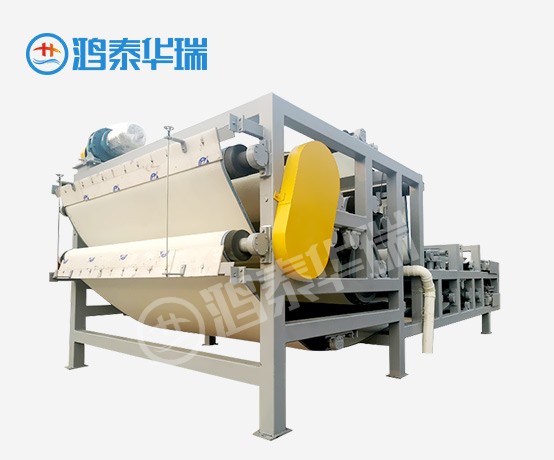
At a time when the wastewater treatment industry is undergoing iterative upgrades, AI technology is breaking down traditional operational barriers. The “human–vehicle–machine” collaborative model has become a key pathway to solving industry pain points. Xiaomi once used smartphones as an entry point to build an intelligent ecosystem connecting people, vehicles, and homes. Now, Hongtai Huarui has extended this logic into the wastewater treatment sector, using the AI FyhoneOS to connect people, equipment, and delivery processes, redefining an efficient operational model for wastewater treatment.
As practitioners in wastewater treatment, we have long been thinking about the same question—where is the entry point of this industry?
Xiaomi once said that smartphones are the gateway between people and the world. Later, they incorporated cars into their ecosystem and extended it to every light and door in the home, building a fully interconnected intelligent system.
Working in the wastewater treatment industry, we have also long contemplated a core question: where exactly is the true entry point of this industry?
In the past, the answer was pipelines and equipment. Wastewater flows in, gets treated, and is discharged, repeating day after day. Operators closely monitor tank operations, engineers adjust parameters based on data sheets, and procurement staff check inventory records to arrange chemical replenishment. There is nothing inherently wrong with this model, yet it has always remained passive—equipment, personnel, and chemicals are disconnected, like three isolated islands.
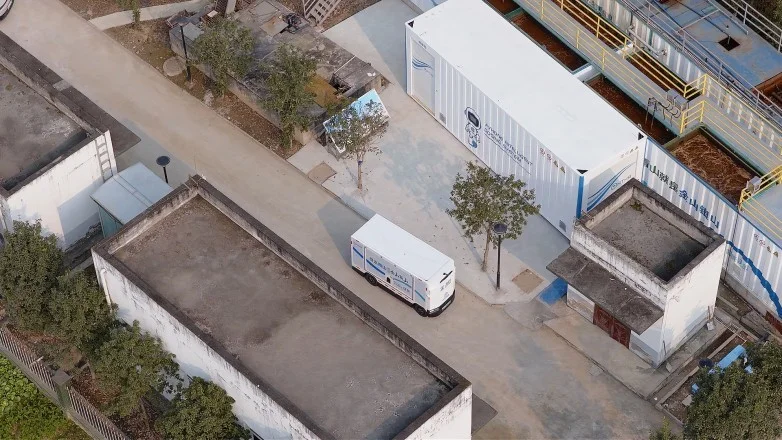
What we are doing now is connecting these three islands to build a new collaborative ecosystem.
Machines are no longer just equipment, but intelligent units that can think.
Traditional wastewater treatment equipment is “silent.” It operates but does not think; when faults occur, manual troubleshooting is required; when parameters deviate, adjustments rely on experience. A veteran technician with 20 years of experience can sustain the stable operation of a plant. However, experienced operations personnel are becoming increasingly scarce, while the number of plants requiring managed operations continues to grow.
Our first step is to make equipment “learn to think.”
Through sensing modules, data on water quality, energy consumption, and process operations are collected in real time. The backend AI FyhoneOS continuously learns, makes intelligent judgments, and issues proactive warnings. Instead of passively alerting after a failure occurs, the system can provide preventive maintenance suggestions up to three days in advance. Instead of relying on human experience for parameter adjustments, it dynamically optimizes aeration, dosing, and recirculation processes based on changes in influent water quality.
There is a key detail that is often overlooked: chemicals.
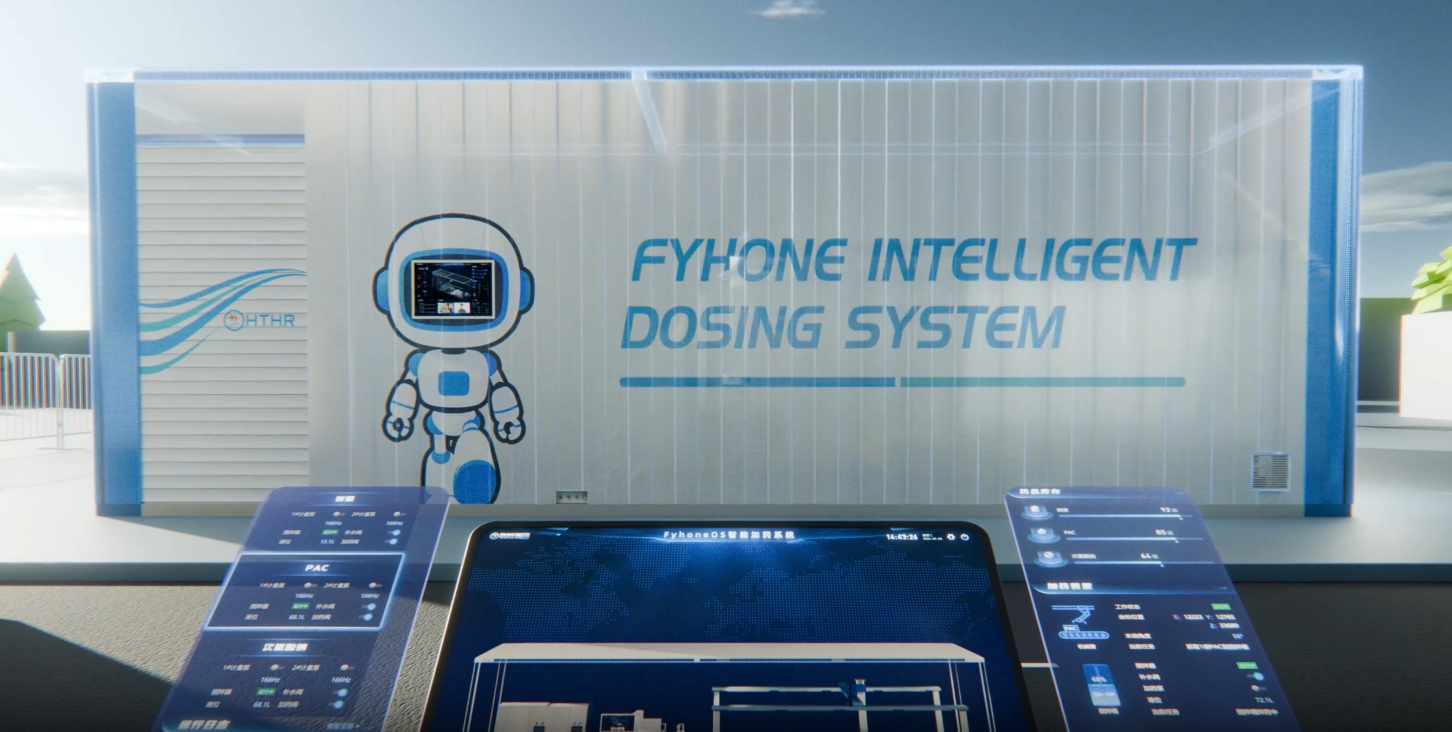
Chemical dosing is one of the most frequent manual intervention steps in wastewater treatment. Timing, dosage, and inventory levels all rely on manual monitoring. Any oversight can lead to effluent standards being exceeded. In our intelligent system, chemical inventory levels are monitored in real time, not recorded afterward in ledgers.
When chemical concentration reaches a preset threshold, the system does not merely send a reminder and wait—it directly triggers the next coordinated action.
Vehicles are not about the cars themselves, but about intelligent dispatching.
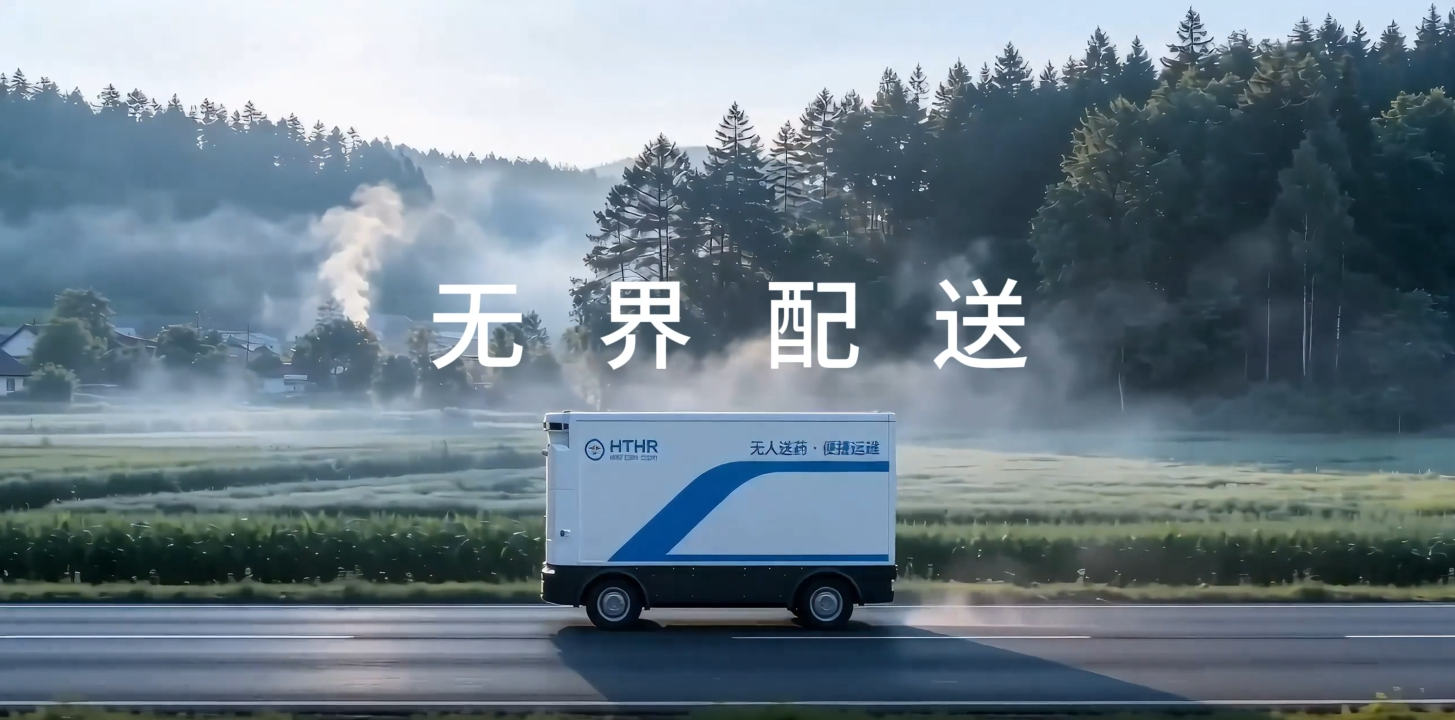
It must be clarified that unmanned delivery vehicles are not developed in-house. The market already offers mature and stable autonomous delivery equipment, with sufficient range, load capacity, and navigation accuracy for the scenario. We do not need to reinvent the wheel; instead, we equip these vehicles with a dedicated intelligent brain—an intelligent dispatch system.
When a wastewater treatment plant triggers a low-chemical alert, the system simultaneously completes three tasks: accurately identifying the required chemical type, matching the nearest loaded vehicle, and planning the optimal delivery route, then directly assigning the task to the most suitable vehicle. The entire process requires no human intervention, taking only minutes from detecting a shortage to dispatching a vehicle.
Behind this is a real-time dynamic dispatch network. The location, chemical type, and remaining capacity of each delivery vehicle, as well as the consumption rate and estimated depletion time at each plant, are continuously updated on the platform. Dispatching is no longer a passive “find a vehicle when there is demand” process. Instead, the system predicts needs before shortages fully materialize, ensuring delivery is already underway.
Autonomous vehicles solve the “last mile” physical delivery problem, while the intelligent dispatch system solves the core decision-making problem—who decides, when to dispatch, and which vehicle to assign. Hardware can be sourced externally; the dispatch brain is the core value of this ecosystem.
Humans move to higher-value positions.
When machines can perceive and vehicles can deliver autonomously, where should humans stand? At the level of command and decision-making.
With a mobile screen, one can clearly grasp the real-time operational status of an entire plant. AI automatically generates daily operation reports, accurately summarizing nighttime anomalies and handling results. Process optimization suggestions are presented intuitively, requiring only confirmation or minor adjustments by operations staff, without recalculating everything from scratch.
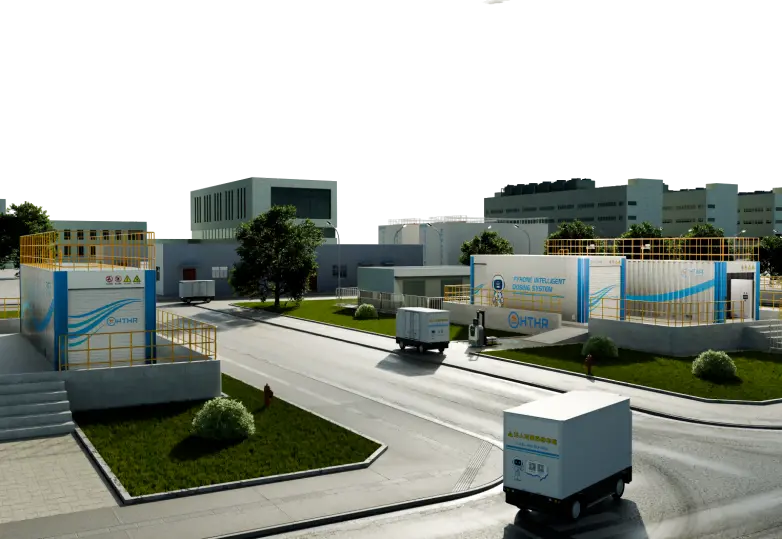
More importantly, this ecosystem allows a single senior engineer to stably manage five or more plants simultaneously. This is not about overextending human capacity, but about leveraging intelligent technology to amplify it.
We are not selling a system; we are reconstructing a relationship.
Between humans, vehicles, and machines, the process is no longer a linear flow of “people operating equipment and driving to replenish chemicals.” Instead, it forms a continuously interactive intelligent closed loop: equipment detects gaps, the dispatch system responds, autonomous vehicles fill the gaps, and humans focus on higher-level decision-making and management beyond routine processes.
The wastewater treatment industry has never lacked individual equipment or isolated technologies. What is truly scarce is a systematic solution—one that frees people from passive monitoring, eliminates reliance on manual oversight for chemical replenishment, and enables every wastewater treatment plant to achieve stable, standardized managed operations.
“Redefining wastewater treatment with AI” is not just a slogan. It answers a fundamental industry question: when sensing, dispatching, and execution can all be automated, what fundamental transformation will occur in wastewater treatment operations?
And we are building that answer with our own hands.
The FyhoneOS is now officially open for investment promotion. Agency partnerships, collaborations, and exclusive regional agreements are all open for discussion. With strong technical capabilities and a timely policy opportunity window, do not miss this chance.


 hthrjt2017@gmail.com