Predictive maintenance: How can AI algorithms warn of equipment failures before they occur?
- release date: 2026-02-10 09:51:23
- author: Hongtai Huairui
- Reading: 685
- key words: Predictive Maintenance for Wastewater Treatment Plants、Early Warning for Wastewater Treatment Plants、Artificial Intelligence for Wastewater Treatment Plants、Equipment Failure / Equipment Fault、
Water is the source of life, and wastewater treatment plants are like the silent guardians of a city’s “kidneys,” running non-stop day and night, purifying every drop of wastewater generated in our daily lives. However, few people notice that these tireless “kidneys” can also experience “illness” moments — pump bearings gradually wear out, aeration heads may get clogged with debris, and motors can overheat after running at high loads for extended periods. Even a small failure in one piece of equipment can cause the entire wastewater treatment process to stagnate, potentially leading to significant environmental pollution.
Faced with these frequent and hidden equipment risks, we have long used traditional preventive maintenance models, which are more like “blind men touching an elephant.” This often leads to a dilemma: either over-maintaining, investing massive amounts of manpower, material resources, and financial capital, resulting in unnecessary waste of resources, or failing to maintain properly, not identifying potential faults in time, and ultimately causing accidents that force the city’s “kidneys” to “shut down.” The real solution to this predicament lies in AI-driven predictive maintenance technology. It’s like installing an “intelligent early warning system” in wastewater treatment plants, transforming the operation and maintenance model from passively waiting for failures to occur and then rushing to fix them, to proactively predicting and defending against issues in advance.
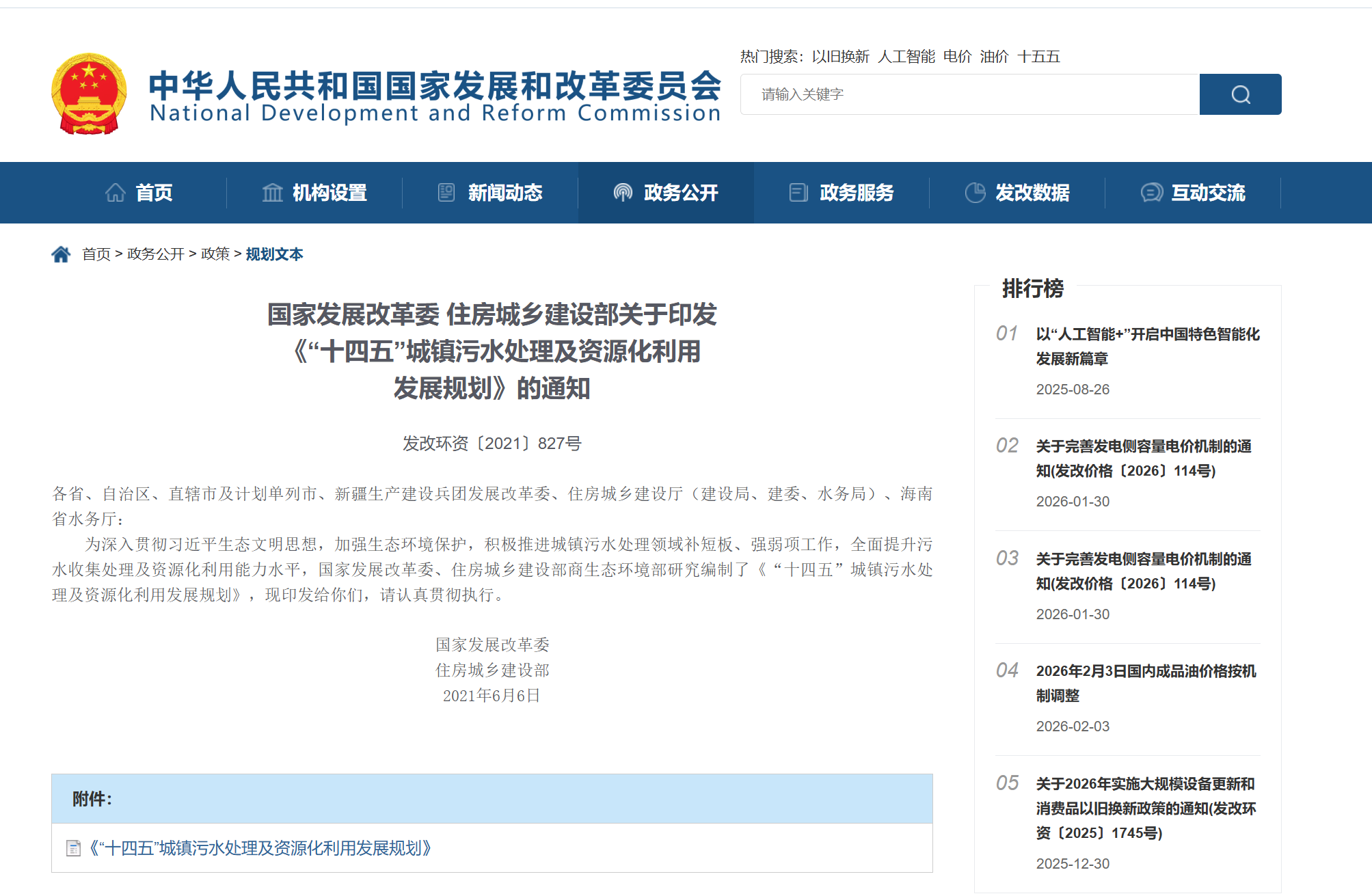
Behind this transformation is not just a technological upgrade, but also a reflection of current urban development policies. In recent years, China has issued policies such as the “14th Five-Year Plan for Urban Wastewater Treatment and Resource Utilization Development” and the “Guidelines for Smart Wastewater Treatment Plant Construction” (released in Chongqing in 2025, effective June), which clearly state the need to push for the digitalization and intelligence of wastewater treatment plants. AI-driven predictive maintenance technology is precisely the core approach to implementing these policy requirements and improving operational efficiency. Essentially, the core of predictive maintenance is not complicated: it involves using sensors to capture various operational data in real time and then analyzing these data using AI algorithms to accurately assess the health status of equipment. This allows clear warning signals to be sent before a fault actually occurs, providing sufficient time for maintenance personnel to address the issue. Today, this so-called “high-tech” technology has already moved beyond the laboratory and has been successfully implemented in several countries around the world and in key wastewater treatment plants within China, yielding practical results.
At Singapore’s Changi Wastewater Treatment Plant, engineers have deployed a prediction model based on the LSTM neural network for pumps. This AI algorithm is particularly good at handling time-series data, allowing it to detect subtle changes in the operating status of equipment, monitoring pump vibrations, temperature, and current data in real time. According to publicly available data from Singapore’s Public Utilities Board (PUB), this model enables engineers to predict bearing wear faults 7 to 14 days in advance, which not only increased the equipment’s mean time between failures by 45%, but also successfully reduced operational and maintenance costs by 30%, making equipment maintenance more efficient and economical.
The Netherlands’ exploration is more innovative. The local Wetsus Water Treatment Research Institute has developed a federated learning-based cross-plant fault prediction platform. Some may not be familiar with federated learning, but in simple terms, it is a distributed machine learning technology that protects data privacy. It allows different cities’ sewage treatment plants to share model training results without disclosing their core data. According to the 2024 industry report from Wetsus Water Treatment Research Institute, this platform has reduced the deployment time for prediction models in new plants from six months to just two weeks. Additionally, the model’s generalization ability — its ability to adapt to different plant equipment and water quality scenarios — has increased by 60%, significantly lowering the technological implementation threshold.
In China, AI predictive maintenance technology is also widely applied. Shanghai’s Bailonggang Wastewater Treatment Plant, the largest in Asia, uses a Convolutional Neural Network (CNN)-based aeration tank bubble monitoring system. This AI algorithm excels in image recognition and can capture the shape of bubbles in aeration tanks in real-time through cameras, automatically identifying abnormalities such as uneven aeration or aeration head blockages. According to the plant’s operational data, after implementing the system, aeration efficiency increased by 15%, and electricity costs were reduced by 12%, proving the technology’s practicality. In addition to Bailonggang, many domestic wastewater treatment plants are also gradually implementing AI-based water management systems, such as Shandong Asia Pacific Senbo Wastewater Treatment Plant, which has deployed the AIWaterSystem intelligent water management system with an LSTM model to achieve full-process intelligent management. It is expected to save 2 to 3 million yuan in operating costs annually.
In fact, the development of AI predictive maintenance technology follows a gradual process, not something that happens overnight. Initially, it began with single-point monitoring, where sensors were deployed on individual devices to monitor single parameters like temperature and vibration. Simple fault alarms were set based on thresholds. The next stage was the multi-parameter fusion phase, where data from multiple sensors was integrated, and machine learning algorithms were used to analyze the health of equipment more deeply, making fault predictions more accurate. The future direction is the global intelligent phase, where wastewater treatment process data, water quality data, and all equipment operation data are combined to create a digital twin — a digital model of the actual wastewater treatment plant on a computer. By simulating different operating conditions, the entire process can be intelligently optimized.
Currently, most small and medium-sized wastewater treatment plants worldwide are still in the single-point monitoring phase, while leading plants have entered the multi-parameter fusion phase and are gradually advancing towards the global intelligent phase. For example, the Copenhagen Wastewater Treatment Plant in Denmark is fully committed to building a digital twin system, optimizing aeration strategies and chemical dosing by simulating wastewater treatment processes under different operating conditions. According to public data from the Copenhagen Environmental Agency, this system has already reduced energy consumption by 20% and improved treatment efficiency by 15%, demonstrating the enormous potential of global intelligence.
As AI technology continues to evolve, predictive maintenance will play an increasingly significant role in wastewater treatment. In the future, edge computing will gradually become popular, enabling AI models to be deployed directly on edge devices. This will not only allow for low-latency real-time alerts but also reduce data transmission costs while better protecting data privacy. Large language models will also be introduced to automatically generate fault diagnosis reports and specific maintenance plans, further improving operational efficiency and easing the workload on staff. More importantly, carbon footprint optimization will become a key focus. By incorporating energy consumption data into predictive models, fault warning and energy-saving optimization can be coordinated. This will not only reduce operational costs but also help the wastewater treatment industry achieve a green, low-carbon transformation in line with national ecological and digital development policies.

Ultimately, wastewater treatment is never a small matter. It concerns the well-being of every citizen and the ecological safety of cities. AI-driven predictive maintenance technology not only solves the challenges of traditional maintenance models but also becomes a concrete implementation of national policies for digital and green transformation. With this technology, we can ensure that the “kidneys” of cities operate continuously and healthily, make every drop of water efficiently utilized, and create cleaner and more livable urban ecosystems. In the future, as AI technology deeply integrates with the wastewater treatment industry, we will jointly protect the ecological lifeline of cities and steadily move toward a green, low-carbon, and smart future.


 hthrjt2017@gmail.com