When stepping into any large-scale pig farm, it’s hard to miss the dual pressures of environmental compliance and cost-efficiency. From birth to market, each fattening pig generates about 6 tons of wastewater, laden with high concentrations of organic matter, ammonia nitrogen, and suspended solids. Improper treatment not only leads to foul odors but can also pollute nearby rivers and soil. Worse still, farms may face penalties from environmental authorities or even be forced to halt operations.
As global "carbon neutrality" goals gain momentum, environmental policies are becoming increasingly stringent. Denmark plans to introduce a carbon tax on livestock farming by 2030, the U.S. incentivizes biogas recovery with tax credits and carbon credits, and China’s revised 2025 emission standards will require large-scale pig farms to achieve “zero wastewater discharge + resource reuse,” with an MBR (Membrane Bioreactor) process penetration rate reaching 50%. This has led more farm operators to realize that wastewater treatment is no longer just about meeting regulatory standards but finding a path that is both compliant and profitable.
In fact, wastewater from pig farms contains a "hidden energy source." With proper scientific treatment, this seemingly dirty water can be converted into biogas—primarily methane—which, once purified, can be used for electricity generation, heating, and even injected into the natural gas grid. The remaining digested solids and liquid slurry can be turned into high-quality organic fertilizer. The industry has already developed a “turning waste into treasure” approach to wastewater treatment, one that doesn’t rely on rigid processes but adapts to the actual operational needs of pig farms.

Efficient Wastewater Treatment Starts with Minor Adjustments at the Source
Truly effective wastewater treatment often begins with small adjustments at the source. Instead of immediately investing in complex facilities, farms can optimize manure management and water systems. For example, replacing traditional water-flushed manure systems with dry scraping, and using intelligent manure scraper boards and separate channels for feces and urine, helps separate solid manure from urine and wash water. This reduces wastewater by more than 60%, and the solid manure can be directly composted into organic fertilizer for early monetization. The remaining wastewater, with a reduced COD (Chemical Oxygen Demand) concentration from 50,000 mg/L to 20,000 mg/L, significantly lowers the costs of subsequent treatment.
Additionally, minor adjustments to feed formulas can help reduce nitrogen and phosphorus excretion in pig manure. Adding enzymes like phytase to the feed reduces phosphorus by 17% and nitrogen by 12%, which directly lowers the pollutants in the wastewater, easing future treatment processes. These seemingly simple adjustments are a result of deeply understanding farm-specific needs and follow the logic of reducing burdens from the source, without relying on complex theories.
Tailored Solutions for Wastewater Treatment
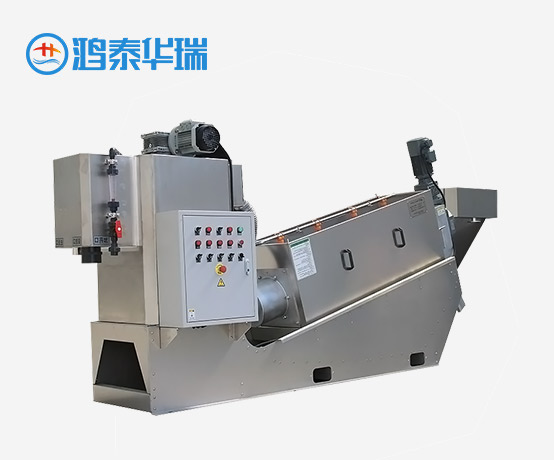
After pre-treatment, wastewater enters the core treatment stage, where a “one-size-fits-all” process is avoided. First, intelligent screens and screw press separators remove suspended solids such as pig hair and leftover feed, which can also be dehydrated and sold as organic fertilizer. The remaining wastewater then enters an anaerobic digester, which is the key to biogas production. Optimized CSTR (Continuous Stirred Tank Reactor) digesters, combined with smart control systems and human-machine collaborative management, can monitor key indicators such as temperature, pH, and methane concentration in real time. The system automatically adjusts mixing speed and feed input, ensuring efficient organic matter breakdown.
Incredibly, 1 ton of wastewater from a pig farm can produce 15 to 20 cubic meters of biogas, which, once purified, can achieve a methane concentration of over 90%. This biogas can completely meet the farm’s electricity and heating needs, including providing warmth to pig barns during winter. The remaining water after anaerobic digestion is further purified using biofilm systems and intelligent aeration. Finally, the water undergoes MBR membrane filtration, achieving a COD removal rate of over 97% and ammonia nitrogen removal rate exceeding 98%. The treated water can then be reused for cleaning pig barns and irrigating crops, achieving full water recycling without relying on municipal water.
In North Carolina, USA, a pig farm with 4,360 fattening pigs has adopted a similar approach to treat its wastewater. Not only did it achieve 97.6% suspended solids removal and 99.7% BOD (Biochemical Oxygen Demand) removal, but 80% of the treated water is also reused for barn cleaning, saving over $30,000 annually in water costs. Leading Chinese farms like Muyuan and Wen's have implemented similar solutions, achieving zero wastewater discharge and energy self-sufficiency. A 100,000-head farm is expected to reduce 31,700 tons of ammonia emissions, cut COD emissions by 16,500 tons, and generate 500,000 kWh of electricity annually, which translates into an additional $30,000 in electricity revenue.
Smart Operations and the Future of Pig Farm Wastewater Treatment
These case studies are not just about showcasing success; they demonstrate that effective wastewater treatment in pig farms isn’t about using overly complex technologies. It’s about aligning with the natural flow of farm operations, addressing pain points, and finding solutions that fit the specific needs of the farm. The deployment of smart operation platforms also reflects this approach: using 32 core sensors to collect real-time data, farm managers can monitor system status via mobile devices or computers, while AI algorithms optimize operational parameters based on factors like farm inventory and wastewater volume. This reduces the need for 24/7 manual labor and cuts operational costs by over 30%.
 In Spain, a pig farm with 10,000 pigs adopted a similar solution, improving nutrient absorption by 20% to 75% and reducing the need for 640 tons of mineral fertilizers annually. The purified biogas is injected into the natural gas grid, generating an extra 100,000 euros per year. These benefits are not a result of additional investments but stem from transforming the farm’s "pollution burden" into "energy wealth." This illustrates the widespread adoption of circular economy principles in the industry—not focusing on “full-chain” or “integrated” models but ensuring smooth connections between each link in the process, ultimately achieving both environmental protection and profitability.
The Green Transformation of Pig Farming: A Global Necessity
As global carbon neutrality targets advance, the green transformation of pig farming is no longer an optional choice but a mandatory course. In the future, the industry will not be limited to existing technical frameworks but will continue to optimize the design of anaerobic digesters and improve biogas production rates. There will also be deeper applications of AI algorithms in wastewater treatment, making operational adjustments more precise. Additionally, efforts will expand to explore higher-value uses of biogas, allowing methane to play a larger role in sectors like transportation and industry.
In terms of service and collaboration models, the industry is breaking away from “one-size-fits-all” solutions, instead crafting customized solutions for farms of different sizes. Moreover, integrated service systems that combine technology, operations, and financing are being developed to lower investment barriers, enabling more farm operators to transition from “passive compliance” to “active profitability.”

The green development of the pig farming industry is not a distant dream; it’s happening with every source reduction adjustment, every efficient conversion of biogas, and every cycle of water resource reuse. The industry consensus is clear: an effective wastewater treatment solution should not be formulaic or based on rigid technology but should align with the actual farm scenario, follow the natural flow of operations, and be easily understood and adopted by farm managers to maximize benefits.
With continued technological advancements and industry collaboration, breakthroughs in the environmental protection of livestock farming are inevitable. By integrating global cutting-edge technology with local practical experience, more pig farms will be able to overcome environmental pressures and walk the green development path with greater stability and success—contributing real-world solutions and practical efforts toward achieving global carbon neutrality goals in the livestock sector.


 hthrjt2017@gmail.com