
Zero emission technology for wastewater from domestic waste incineration power plant
- Release date: 2025-11-20 16:00:22
- Author: 鸿泰华瑞
- Reading: 359
- Keywords: domestic waste incineration power generation
Hongtai Huarui Technology Group welcomes your visit. We have been dedicated to the environmental protection and governance industry for over a decade! We look forward to a cooperation with you!




Product Certification

Invention Patent

Software copyright

QPC Certification

Environmental Protection As56ciation

Credit rating

19102876179

According to the survey, leachate wastewater accounts for about 50% of the wastewater discharge in the plant area, and most of the rest are saline wastewater.
A waste-to-energy plant is equipped with a leachate treatment system, and the main treatment process adopts the treatment process of "upstream anaerobic sludge bed (UASB) + membrane bioreactor (MBR) + nanofiltration (NF) system + reverse osmosis (RO) system". The landfill leachate and part of the wastewater are mixed evenly by the conditioning tank and enter the UASB reactor through the lift pump, and the organic matter is adsorbed and decomposed, and the sludge with good sedimentation performance is returned, containing a small amount.
At this stage, the waste-to-energy plant uses fresh water for greening water and ground flushing water, and the sewage discharge from the circulating cooling system is discharged from the leachate treatment station to the downstream sewage treatment plant.
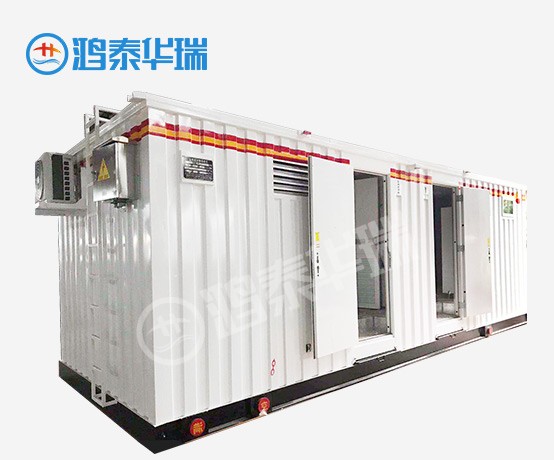
According to the principle of "sewage diversion and quality treatment" of wastewater, it is recommended to configure a 150m3/d production wastewater treatment system to treat the sewage discharged from the circulating cooling system, the sewage discharged from the desalination system and the sewage discharged from the boiler, and the design adopts "primary softening + filtration + reverse osmosis (RO)" for treatment. The incoming water enters the conditioning tank, enters the primary softening unit through the lifting pump of the conditioning tank to remove part of the hardness in the water, and the outgoing water enters the filtration unit to further remove turbidity, colloids and suspended solids. The effluent enters the reverse osmosis (RO) treatment system after being pressurized by the water supply pump, further removing part of the hardness and alkalinity and heavy metal ions in the water, and the effluent enters the temporary storage device for reuse with the effluent from the leachate treatment station. According to the operation monitoring results of the production wastewater treatment system of a B waste-to-energy plant in Shandong Province, Table 2, the main pollutant indicators of effluent water quality can meet the supplementary requirements of the open circulating cooling water system in the urban sewage recycling industrial water quality (GB/T19923-2005).
At the same time, for the concentrated water generated by the filtration system of leachate treatment station and production wastewater treatment station, it is recommended to add a set of disc type reverse osmosis system (DTRO) to reduce and re-concentrate the concentrated water, and the wastewater can be further concentrated by 60%-70% after DTRO concentration treatment, which ultimately greatly reduces the amount of reverse osmosis concentrate. DTRO concentrated water is used for the preparation of desulfurized lime slurry This optimization scheme can reduce the use of fresh water and wastewater discharge by about 50,000 m3/a each.
In the actual utilization process, the water supply and drainage system of the whole plant can be comprehensively managed by establishing a water information management platform, and the recycling of wastewater can be dynamically regulated.
4. Conclusion
The leachate treatment station of a waste-to-energy plant in Shandong Province adopts the process of "upstream anaerobic sludge bed (UASB) + membrane bioreactor (MBR) + nanofiltration (NF) system + reverse osmosis (RO) system", and adds a production wastewater treatment station and disc tube reverse osmosis system (DTRO) using the "primary softening + filtration + reverse osmosis (RO)" process through design optimization to treat wastewater. Reducing the consumption of fresh water and wastewater discharge has considerable environmental and economic benefits.
Previous article:Application of MVR in recycling high-sal...
Next article:Constructed wetland sewage treatment tec...
The content you might be interested in
Environmental Protection Information
Selected Recommendations
Recommended Products